White paper. For players and their families
The recruiting timeline
What to do each year from freshman year to signing day, and what to do if you are starting late.
The short answer
In football and many other Division I sports, June 15 after sophomore year is the first date a coach can call or message an athlete. Freshman year is for grades and habits, sophomore year for getting organized, junior year for getting seen and senior year for deciding. Division I asks for 16 NCAA-approved core courses and at least a 2.3 GPA in them, and since 2024 a signed written offer of athletics aid has taken the place of the National Letter of Intent.
On this page
Every athlete who wants to play in college pictures the same moment: a school that wants you and an offer you can sign. That moment gets built in small steps across four years of high school. I played long snapper at two Division I programs, Michigan State and Miami, and this is the calendar I would hand any freshman who wants a real shot at the next level.
The rules that set the calendar.
NCAA rules differ by sport and division and they change, sometimes more than once a year. Treat every date here as a starting point and confirm it with the NCAA Eligibility Center or the compliance office at the school you are talking to.
- Academics. Division I asks for 16 NCAA-approved core courses. Ten of them, seven in English, math or science, must be done before the start of your seventh semester. You need at least a 2.3 GPA in those core courses. Test scores are no longer required for Division I eligibility for students who enroll on or after August 1, 2023, though a school may still want them for admission.
- The Eligibility Center. Athletes headed to Division I or II create an Academic and Athletics Certification account.
- When coaches can reach you. In football and many other Division I sports, June 15 after your sophomore year is the first date a coach can call or message you, and the first date they can send you recruiting material. In football, in-person contact away from campus cannot start before January 1 of your junior year. Other sports use other dates.
- Signing. Division I ended the National Letter of Intent in 2024. A signed written offer of athletics aid is now the commitment, and it can only be signed during your sport's signing period. Once you sign, other schools that offer athletics aid have to stop recruiting you. Division II schools may still use the National Letter of Intent.
Year by year.
| When | Focus | What to do |
|---|---|---|
| Freshman year | Grades and habits | Put core courses first and build lifting and sleep habits. Save game film from every season, even if you barely play. |
| Sophomore year | Get organized | Check core courses with your counselor and get measured at your position. List schools at several levels, from Division I to junior college. |
| Junior year | Get seen | Create your Eligibility Center account and cut junior film fast. Answer coaches the same day and take unofficial visits to schools on your list. |
| Senior year | Decide | Compare offers on fit, playing time, degree and cost. Keep grades up, since offers depend on them, and sign in your sport's signing period. |
Month by month in the years that matter most.
| Months | What to do |
|---|---|
| June and July after sophomore year | June 15 is a common first contact date. Send position coaches a short note with a film link, and go to a camp where they will be. |
| End of junior season | Cut your highlight film within two weeks of the last game. Send it with your GPA and your numbers, along with your coach's contact. |
| January to May of junior year | Ask your high school coach what college staffs are saying, and take unofficial visits. Plan summer camps around the schools that answered. |
| Summer before senior year | Go to camps and visits and update your numbers. Check core courses with your counselor and write down your sport's signing dates. |
| Senior year | Send senior film early in the season and apply to schools. In spring, make sure your counselor uploads your final transcript and proof of graduation. |
Getting in front of coaches.
Your film should open with your best plays and stay short, with one full series so a coach can see effort between plays. One link holding your film, numbers, grades and coach's contact does most of the work.
A camp is worth the money when a coach from a school on your list will be there, so write before you go and say thank you after. Your family pays for an unofficial visit and the school pays for an official one. Dates and limits differ by sport and have changed in recent years, so look yours up before you plan.
If you are starting late.
Plenty of athletes start as juniors or seniors and still find a team. If that is you, take these steps in order.
- This week. Create your Eligibility Center account and ask your counselor where you stand on core courses.
- This month. Cut your film with numbers your coach has verified, and send a short note to 20 to 30 position coaches across several levels.
- Ask your coach to call. College staffs trust high school coaches, and one call from yours can do more than ten emails from you.
- Keep every level open. Division II, Division III, the NAIA and junior colleges each run their own calendars, so write to them too.
- Before a gap or prep year. Division I is moving to an age-based eligibility model. For students who first enroll in fall 2027 or later, it allows up to five years of eligibility if you enroll no later than the academic year after your 19th birthday. Ask the Eligibility Center how a delay would affect you.
Who does what.
- Athletes
- Own the process: grades, film, emails and follow-ups. Coaches are recruiting you, and they want to hear from you.
- Parents
- Keep the calendar and the records, and help with logistics and costs while your athlete does the talking.
- High school coaches
- Verify the numbers and give honest feedback on level. When a college staff calls, answer the same day.
Sources. NCAA, Division I Initial Eligibility Requirements (ncaa.org/eligibility-center/initial-eligibility-requirements/division-i). NCAA, Recruiting (ncaa.org/eligibility-center/recruiting). NCAA, Comprehensive DI football recruiting model recommended, April 2023 (ncaa.org/media-center-comprehensive-di-football-recruiting-model-recommended). NCAA, DI Council approves changes to notification-of-transfer windows, October 2024, on written offers replacing the National Letter of Intent (ncaa.org/news/2024/10/9/media-center-di-council-approves-changes-to-notification-of-transfer-windows-in-basketball-football.aspx). NCAA, Scholarships and Financial Aid (ncaa.org/student-athletes/scholarships-and-financial-aid). NCAA, Division I adopts age-based eligibility model, June 2026 (ncaa.org/division-i-adopts-age-based-eligibility-model). Checked October 2026. Rules differ by sport and change; confirm at the NCAA Eligibility Center.
About the author
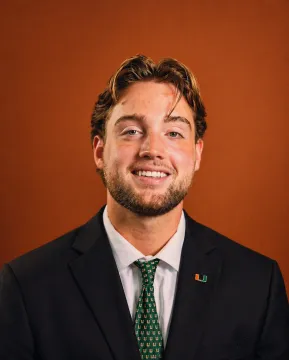
Michael Donovan is the founder and CEO of SnapMind. He was a long snapper at Michigan State and the University of Miami.
A player's schedule, plan and coach-verified recruiting profile can all live in one app. You can read about SnapMind Teams or browse the rest of the SnapMind Library.
Download the PDFAnswer three short questions and the PDF downloads.