
 Library.
For program leaders at any level
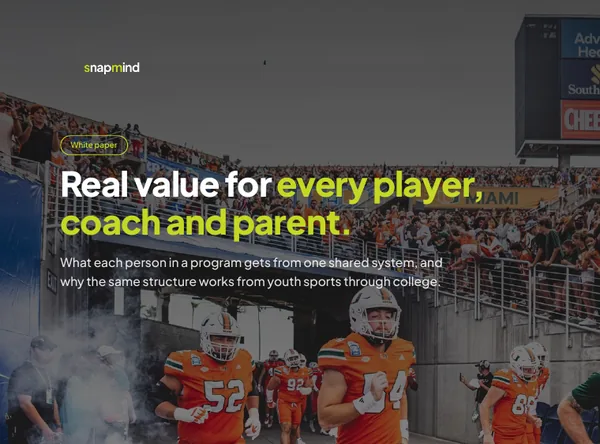
Real value for every player, coach and parent
It explains what coaches, parents and players each get from one shared system, and why that works at every level.
 Library.
These are nineteen short guides on running an organized program and helping athletes reach the next level, free to read and download, for programs from youth sports through college. A former Division I long snapper wrote them after building the app his own teams needed.

19 papers
It explains what coaches, parents and players each get from one shared system, and why that works at every level.
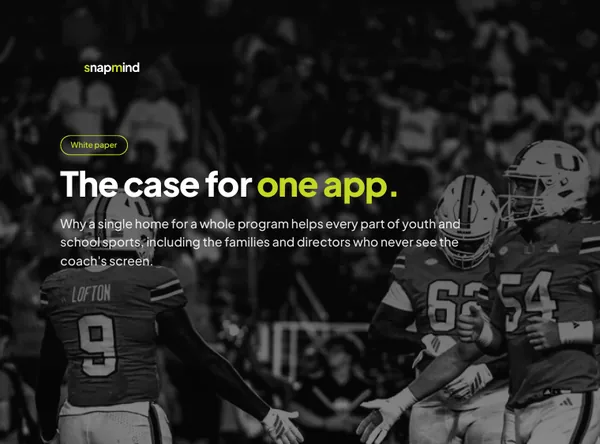
It explains how keeping a whole program in one place helps families, coaches, directors and the wider market.
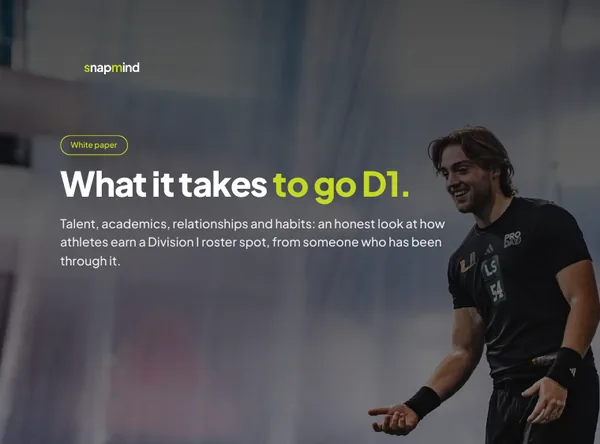
Talent, academics, relationships and habits all play a part in reaching Division I, and this paper looks at each one honestly.
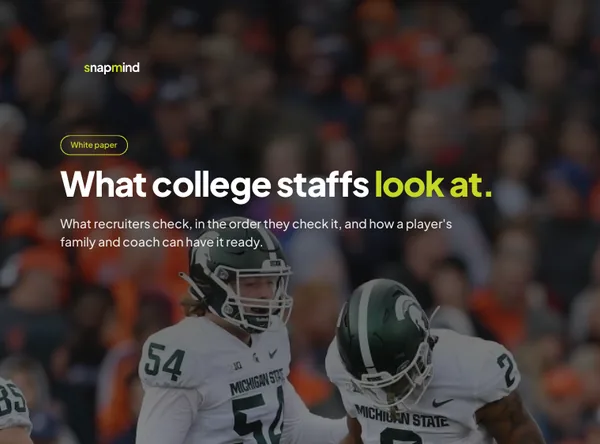
Recruiters check things in a set order. This paper lists them in that order and shows how to have each piece ready.
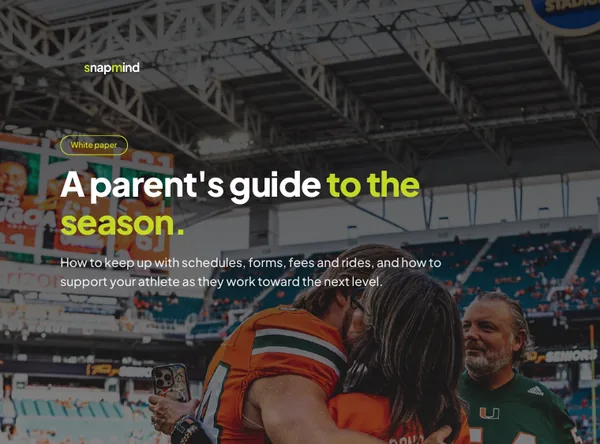
It helps you keep up with schedules, forms, fees and rides while you support your athlete's path.
It explains why group texts break down and lays out a setup that reaches the right people once.
It shows how to collect forms, physicals, waivers and dues in one place while the program sets every money rule.
It covers how a team app should handle young athletes and their data, and gives ten questions to ask any vendor.
It shows how to get arrival times, uniforms, rides and hotel blocks to every family before game day.
It explains how an athlete's history can follow them through every program they join, from youth sports to college.
It shows how an athletic director can see every coach and family on every team without chasing anyone.
This paper sets SnapMind beside the group chats, sign-up sites, calendars and recruiting services programs already use.
You get a plan by year and by month from freshman year to signing, plus what to do if you start late.
It walks through in-season and off-season days hour by hour, explains the NCAA hour limits behind them and suggests habits to start now.
A few things a parent does matter most, and extra effort in other places tends to backfire. This paper covers both.
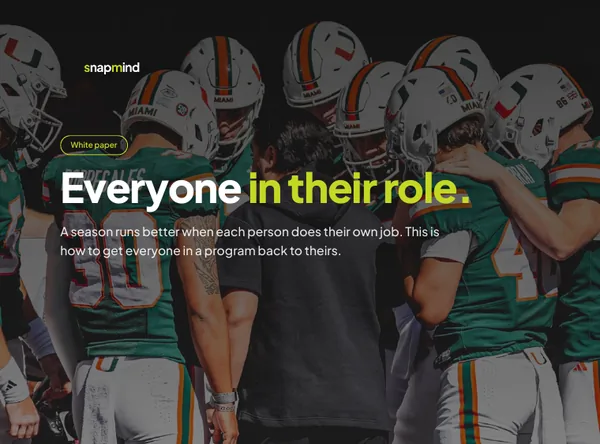
It explains how each person in a program can get back to their own job, and what SnapMind gives each of them.
Running a program commonly breaks down in eight places, from group chats to season turnover, and this paper gives a fix for each.
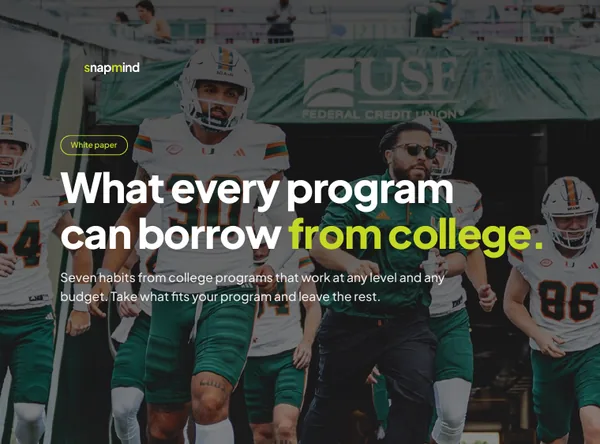
It describes seven habits from college programs that work at any level and budget, so you can borrow the ones that fit.
It covers six things programs and families overcomplicate, from group chats to highlight reels, and a simpler way to handle each.
No paper matches that yet. Try another word or clear the filter.
Create your team, then bring in your real roster from a spreadsheet or a photo.
Set up your team